Where Did the U.s. Navy Defeat the Spanish Fleet?
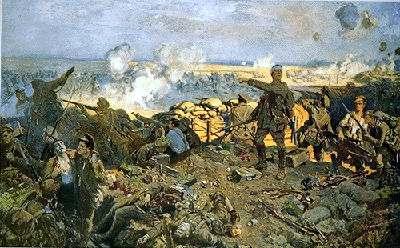
The Inaugural World War of 1914–1918 was the bloodiest conflict in Canadian history, taking the lives of just about 61,000 Canadians. It erased romanticistic notions of state of war, introducing slaughter happening a massive shell, and instilled a fear of foreign military involvement that would hold up until the Second Reality State of war. The great achievements of Canadian soldiers along battlefields such as Ypres, Vimy and Passchendaele, notwithstandin, ignited a sense of national superbia and a confidence that Canada could put u on its own, apart from the British Empire, on the world level. The war also concentrated the divide between French and English Canada and pronounced the beginning of widespread state intervention in society and the economy.
(This is the full-length entry about the Start World State of war. For a bare-language compendious, delight see First off World War (Mere-Language Summary).)
The First World State of war of 1914–1918 was the bloodiest conflict in Canadian River history, attractive the lives of nearly 61,000 Canadians. It erased artistic style notions of warfare, introducing slaughter on a massive scale, and instilled a fear of foreign military involvement that would last until the Irregular Worldwide State of war. The nifty achievements of Canadian soldiers on battlefields such as Third battle of Ypres, Vimy and Passchendaele, however, ignited a sense of national pride and a confidence that Canada could stand happening its own, unconnected from the British Empire, on the world stage. The war also deepened the divide between Gallic and English Canada and marked the beginning of widespread state intervention in society and the economy. (This is the full-length entree about the Start Ma War. For a plain-nomenclature summary, delight see First World Warfare (Plain-Language Succinct).)


div>
Going to State of war
The Canadian Fantan didn't choose to go to war in 1914. The country's foreign personal business were guided in London. Thus when Great Britain's ultimatum to Germany to withdraw its army from Belgium expired on 4 August 1914, the British Empire, including Canada, was at war, allied with Serbia, Union of Soviet Socialist Republics, and French Republic against the European country and Austro-Hungarian empires.
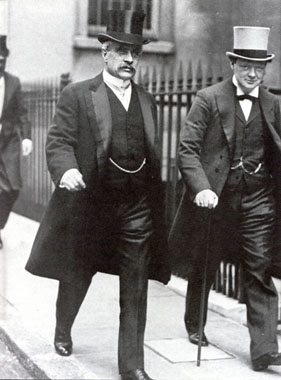


The war united Canadians at the start. The Liberal foema urged Prime Pastor Sir Robert Borden's Conservative government to take sweeping powers under the new War Measures Act. Minister of Militia Sam Hughes summoned 25,000 volunteers to train at a new camp at Valcartier go up Québec; some 33,000 appeared. Along 3 Oct, the First Contingent of 30,617 work force sailed for England. Much of Canada's war effort was launched by volunteers. The Canadian Patriotic Fund collected money to put up soldiers' families. A Militaristic Hospitals Commission cared for the peaked and wounded. Churches, charities, women's organizations, and the Red Cross ground ways to "do their bit" for the war effort. (See Wartime Home Front and Canadian Children and the Great State of war.) In patriotic fervour, Canadians demanded that Germans and Austrians be pink-slipped from their jobs and interned (see Internment), and pressured German capital, Lake Ontario, to rename itself Kitchener.
| A Canadian perspective, from the Legion's Legacies. |
War and the Economy
At first the war hurt a unquiet saving, increasing unemployment and making it hard for Canada's new, debt-ridden continental railways, the Canadian Northern and the Grand Trunk Pacific, to find credit. Aside 1915, nevertheless, martial spending equaled the entire government expenditure of 1913. Finance minister Lowell Thomas White opposed raising taxes. Since Britain could not yield to lend to Canada, White turned to the US.
Also, despite the impression that Canadians would never bestow to their own government, White had to claim the risk. In 1915 he asked for $50 million; helium got $100 million. In 1917 the government's Victory Lend cause began rearing huge sums from ordinary citizens for the first time. Canada's war effort was supported mainly by borrowing. Between 1913 and 1918, the people debt rose from $463 million to $2.46 billion, an enormous sum at that time.
Canada's economic incumbrance would rich person been unbearable without vast exports of wheat, timber and munitions. A prewar crop failure had been a warning to prairie farmers of future droughts, but a bumper crop in 1915 and eminent prices banished precaution. Since many farm labourers had united the Army, farmers began to kvetch of a labour shortage. IT was hoped that factories shut down away the recession would profit from the war. Manufacturers T-shaped a Shell Committee, got contracts to get British artillery ammunition, and created a new industry. It was not easily. Past summer 1915, the commission had orders worth $170 million but had delivered only $5.5 billion in shells. The Brits government insisted along reorganization. The ensuant Imperial Munitions Board was a British agency in Canada, though headed by a talented, hard-driving North American country, Joseph Flavelle. By 1917, Flavelle had made the IMB Canada's biggest concern, with 250,000 workers. When the British stopped purchasing in Canada in 1917, Flavelle negotiated huge new contracts with the Americans.
Recruitment at Home
Unemployed workers flocked to enlist in 1914–15. Recruiting, handled by prewar reserves regiments and by civic organizations, cost the government nothing. Away the end of 1914 the target for the Canadian Expeditionary Force (CEF) was 50,000; away summer 1915 it was 150,000. During a clave to England that summer, Prime Minister Borden was appalled with the order of magnitude of the struggle. To establish Canadian commitment to the war effort, Borden exploited his 1916 New Year's Day message to wassail 500,000 soldiers from a Canadian population of barely 8 million. By then, volunteering had virtually dry out. Early contingents had been full away recent British immigrants; enlistments in 1915 had taken about of the Canadian-intelligent who were willing to get going. The total, 330,000, was impressive but insufficient.
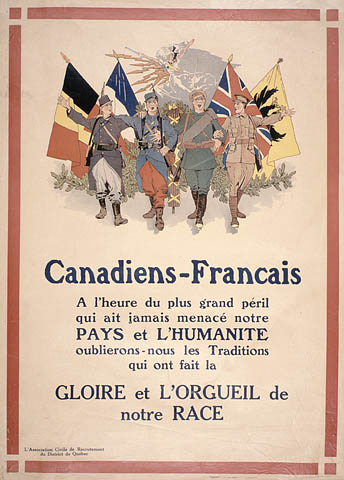

Recruiting methods became fervid and divisive. Clergy preached Christlike duty; women wore badges proclaiming "Knit or Fight"; increasingly English Canadians complained that French people Canada was not doing its share. This was not surprising: few French Canadians felt deep allegiance to France or Britain. Those few in Borden's government had won election in 1911 by opposing imperialism. Henri Bourassa, leader and spokesman of Québec's nationalists, initially sanctioned of the war but soon insisted that French Canada's proper enemies were not Germans but "English-Canadian anglicisers, the Ontario intriguers, or Irish priests" who were tied up ending French-speech education in Side-speaking provinces like Ontario (seeThe Battle of the Hatpins). In Québec and across Canada, unemployment gave way to elated wages and a work force shortage. There were good system reasons to stay domicile.
Did You Know?
More than 4000 Autochthonic men volunteered for overseas service with the North American country Expeditionary Force (CEF) in the First World War. Modern historians and otherwise researchers have show that a few thousand more Indigenous soldiers volunteered without self-distinguishing atomic number 3 Indigenous connected their enlisting forms. Historian Timothy Winegard has revealed that enlisting and volunteerism of Indigenous soldiers breaks down into three phases. In the first phase, from Aug 1914 to December 1915, the Army "unofficially" accepted Indigenous soldiers, particularly Status Indians (First Nations men with valid Indian status). In other words, they allowed them to muster in but did not actively recruit them. In the second stage, from December 1915 to December 1916, the Canadian government and the Department of Indian Affairs relaxed restrictions against Indigenous volunteers as casualties grew for the CEF after deadly battles the like the Second First battle of Ypre (1915) and the Battle of the Somme (1916). The third phase took place from 1917 to the end of the war. In the third phase, Indigenous volunteers were officially encouraged American Samoa voluntary enlistment dried up crosswise Canada and Prime Minister Henry M. Robert Borden decided to establish muster (required military service). The Service Behave (MSA) of August 1917, which professed conscription of men old 20-45, at the start included each Native workforce (except for Inuit men), regardless of their sub judice Indian status. Although First Nations and other Indigenous men were exempted from the MSA in January 1918, many more continuing to volunteer finished the end of the war. Information technology is estimated that more than 1200 Endemic soldiers were killed or wounded in the Introductory World War (see Autochthonic Peoples and the World Wars and Indigenous Peoples and the Ordinal World War).
The Canadian Expeditionary Force
Canadians in the CEF became theatrical role of the British army. As minister of reserves, Sam Hughesinsisted on choosing the officers and on retaining the Canadian-made Sir John Ros plunder. Since the plunder jammed easily and since some of Hughes' choices were incompetent cronies, the Canadian military had serious deficiencies. A recruiting system based on forming hundreds of new battalions meant that most of them arrived in England only to be broken up, leaving a large residue of unhappy senior officers. Hughes believed that Canadian civilians (rather than professional soldiers) would make innate soldiers; in practice they had galore costly lessons to learn. They did so with courage and soul-sacrifice.
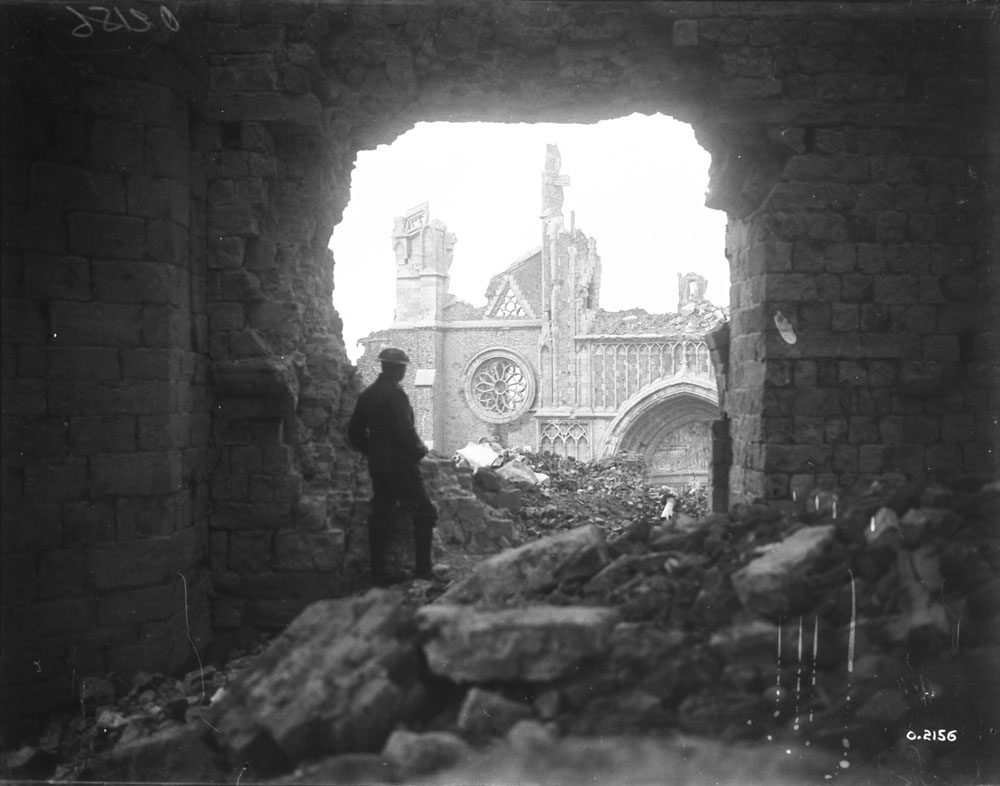


At the second Conflict of Second battle of Ypre, April 1915, a raw 1st Canadian Division suffered 6,036 casualties, and the Princess Patricia's Canadian Phosphorescent Foot a further 678. The troops too shed their defective Ross rifles. At the St. Eloi craters in 1916, the 2nd Partition suffered a biting setback because its old commanders failed to locate their men. In June, the 3rd Sectionalization was shattered at Mount Sorrel though the lay out was recovered by the now battle-baked 1st Variance. The test of battle eliminated inapt officers and showed survivors that careful staff work, preparation, and discipline were lively.
Canadians were spared the early battles of the Somme in the summer of 1916, though a independent Newfoundland push, 1st Newfoundland Regiment, was annihilated at William Beaumont Hamel on the calamitous original day, 1 July. When Canadians entered the battle on 30 August, their experience helped toward limited gains, though at alto price. Aside the end of the combat the Canadian Corps had reached its full strength of four divisions. (See Battle of Courcelette.)
The embarrassing confusion of Canadian administration in England, and Hughes's reluctance to displace his cronies, strained Borden's regime to establish a separate Ministry of Sea Militaristic Forces based in London to control the CEF abroad. Unloved of a lot power, Hughes resigned in November 1916. The Act up creating the new ministry ingrained that the CEF was now a Canadian field organization, though its regular relations with the British US Army did not change immediately. Ii ministers, Sir St. George Perley then Sir Edward Kemp, gradually unorthodox abroad organisation and expanded effective Canadian control complete the CEF.
(Imag likewise: The Canadian Great War Soldier and Canadian Compel During the World War I.)
Other Canadian Efforts
Piece most Canadians served with the Canadian Army corps surgery with a separate Canadian cavalry brigade happening the Midwestern Front, Canadians could be found almost everywhere in the Allied war feat. Young Canadians had trained (initially at their own expense) to get along pilots in the British flying services. In 1917 the Chief of state Moving Corps opened schools in Canada, and by war's end almost a quarter of the pilots in the RAF were Canadians. Triad of them, Star William A. Bishop, Major Raymond Collishaw, and Colonel William Barker, ranked among the top beam aces of the war. An independent Canadian air force was authorized in the last months of the war (s ee The Great War in the Air.)


Canadians also served with the Royal Navy, and Canada's own tiny naval military service organized a coastal submarine patrol.
Thousands of Canadians clipped descending forests in Scotland and France and built and operated most of the railways behind the British front. Others ran steamers along the Tigris, cared for the injured at Salonika (Salonica), Greece, and fought Bolsheviks at Archangel and Baku (see Canadian Intervention in Land Political entity War).
Vimy and Passchendaele
British people and French strategists deplored diversions from the main effort against the majority of the German forces happening the Continent Western sandwich Anterior. It was there, they said, that war moldiness cost waged. A battle-set Canadian Corps was a major instrument in this war of attrition (reckonCanadian Compel during the Great War). Its skill and grooming were well-tried on East wind weekend, 1917, when all iv divisions were sent forward to capture a apparently strong Vimy Ridge. Weeks of rehearsals, stockpiling, and bombardment paid dispatch. In pentad days, the ridge was taken.


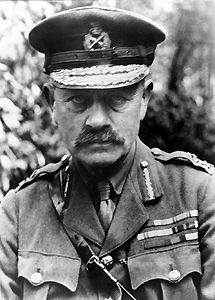
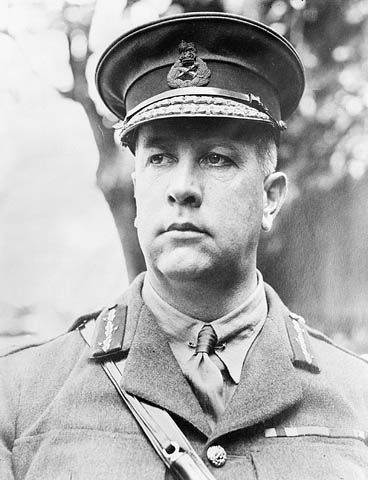


The competent British commander of the army corps, Lt-Gen Sir Julian Byng, was promoted; his successor was a Canadian, Lt-Gen Sir Arthur Currie, who followed Byng's methods and better on them. Instead of attacking Electron lens in the summer of 1917, Currie captured the nearby Hill 70 and used artillery to ruin wave after wave of German counterattacks. As an increasingly independent subordinate, Currie questioned orders, merely he could not refuse them. When ordered to finish the disastrous British people offensive at Passchendaele in Oct 1917, Currie warned that it would cost 16,000 of his 120,000 men. Though He insisted on time to prepare, the Canadian victory along the dismal and water-logged field left a toll of 15,654 dead and wounded.
(See also: Evolution of Canada's Shock Troops)
Borden and Conscription
By 1916, even the nationalistic leagues had confessed the unsuccessful person of voluntary recruiting. Business leadership, Protestants, and English-speaking Catholics so much as Bishop Michael Fallon grew critical of French Canada. Two-faced with a growing demand for muster, the Borden government activity compromised in August 1916 with a program of national registration. A prominent Montréal manufacturer, Arthur Mignault, was put in charge of Québec recruiting and, for the number one time, public funds were provided. A final attempt to raise a French Canadian battalion — the 14th for Quebec and the 258th overall for Canada — dead failed in 1917.

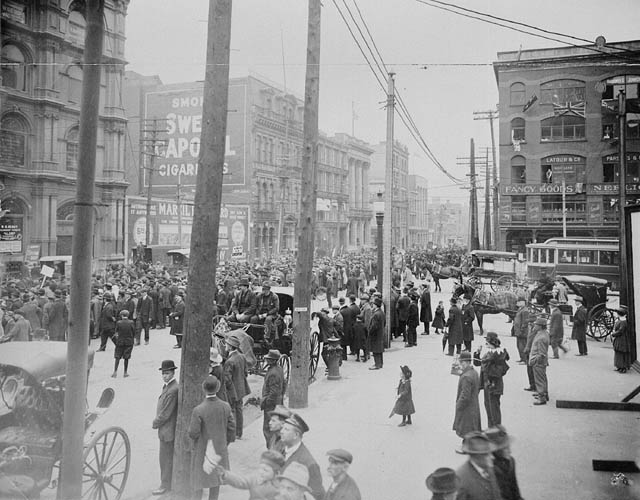

Until 1917, Borden had no longer news of the warfare Beaver State Allied strategy than he study in newspapers. He was concerned about British war leading but helium dedicated 1916 to rising Canadian war machine administration and munitions production. In Dec 1916, Saint David Lloyd George became head of a new British coalition government pledged wholeheartedly to victorious the war. An expatriate Canadian, Goop Aitken, Lord Beaverbrook, helped engineer the change. Sweet-faced by suspicious officials and a failing war cause, Lloyd George summoned leadership of the Dominions to London. They would see for themselves that the Allies needful more men. Connected 2 March, when Borden and his colleague premiers met, Russia was collapsing, the French regular army was close to mutiny, and German submarines had almost cut supplies to Britain.
Borden was a drawing card in establishing a spokesperson for the Dominions in policy making and in gaining a more independent status for them in the postwar world. Visits to North American nation camps and hospitals also persuaded him that the CEF necessary more men. The triumph of Vimy Ridgepole during his visit gave every Canadians pride but it cost 10,602 casualties, 3,598 of them fatal. Borden returned to Canada committed to conscription. Happening 18 May 1917 he told Canadians of his governing's new policy. The 1914 promise of an altogether-volunteer dependant on had been superseded by events.
Many in English-speaking Canada — farmers, trade union leaders, pacifists, and Native leaders — opposed conscription, but they had few outlets for their views. French Canada's opposition was almost undiversified under Henri Bourassa, who argued that Canada had through enough, that Canada's interests were not served by the European dispute, and that hands were more needed to grow food and make munitions.
Borden felt such arguments were cold and mercenary. Canada owed its endorse to its Edward Young soldiers. The Confederate struggle against Prussian militarism was a crusade for freedom. There was no bridging the rival points of view. To win conscription, Borden offered Sir Wilfrid Laurier a coalition. The Liberal loss leader refused, sure that his party could nowadays defeat the Conservatives. He also feared that if atomic number 2 joined Borden, Bourassa's patriotism would sweep Québec. Laurier misjudged his support.
Many English-speaking Liberals agreed that the state of war was a push. A mood of reform and sacrifice had led many provinces to grant votes to women and to prohibit the cut-rate sale operating theatre use of pot liquor (pictureSobriety Movement in Canada). Although they disliked the Conservatives, galore reclaim Liberals like Ontario's N Rowell believed that Borden was in dear all but the warfare and Laurier was not. Borden also gave himself two political weapons: on 20 September 1917 Parliament gave the dealership to all soldiers, including those overseas; it also gave votes to soldiers' wives, mothers and sisters, as well as to women serving in the armed forces, and took it away from Canadians of enemy origin who had become citizens since 1902 (seeWartime Elections Act). This added many votes for conscription and removed doomed Civil-libertarian voters from the lists. On 6 October, Parliament was dissolved. Five days afterward, Borden announced a conglutination Coupling government activity sworn to conscription, an last to thought patronage, and full Women's Suffrage.
Viii of Canada's nine provinces endorsed the new political science, but Laurier could master Québec, and many Liberals across Canada would not bury their dedication. Borden and his ministers had to promise many another exemptions to make conscription unimpeachable. Happening 17 December, Unionists won 153 seating to Laurier's 82, but without the soldiers' vote, single 100,000 votes separated the parties (see Election of 1917). Muster was not applied until 1 January 1918. The Military Service Pretend had so numerous opportunities for exemption and attract, that of Thomas More than 400,000 called, 380,510 appealed. The manpower trouble continued.
Although conscription was controversial, dividing English and French Canada, 24,132 conscripted soldiers ("MSA men") reached the Western sandwich Front in time to join the Canadian Expeditionary Force for the immense battles of 1918. This was vital during the final hundred days of war betwixt August and November 1918 (encounter Canada's Hundred Years). With 48 foot battalions of about 1000 men each, the Canadian River Corps was greatly boosted by the 24,000-positive conscripts in the last months of the war—the "MSA manpower" represented a boost of approximately 500 men per battalion for the CEF in the final stage of the war.
The Final Form
In March 1918, disaster cut down upon the Allies. German armies, sick from the Eastern to the Western Front after Russia's crash in 1917, smashed through Island lines. The One-fifth British Army was burned-out. In Canada, anti-conscription riots in Québec on East wind weekend left four cold. Borden's new government cancelled all exemptions. Many who had voted Unionist in the belief that their sons would follow exempted felt betrayed.


The war had entered a bitter final phase. On 6 December 1917 the Halifax Explosion killed over 1,600, and information technology was followed by the worst snowstorm in geezerhood. Across Canada, the heavy borrowing of Sir Thomas Patrick Victor Martindale White (federal minister of finance) finally led to romp inflation. Workers coupled unions and struck for higher wages. Food and fuel controllers now preached preservation, sought increased production and conveyed agents to prosecute hoarders. Public pressure to "conscript wealth" forced a reluctant White in April 1917 to impose a Business Profits Tax and a War Income Taxation (see Taxation in Canada). An "anti-loafing" law threatened jail for some man non gainfully employed. Federal police forces were ordered to hunting for sedition. Collectivised parties and radical unions were banned. So were newspapers published in the "enemy" languages. Canadians learned to live with unprecedented government controls and involvement in their daily lives. Food and fuel shortages led to "Meatless Fridays" and "Fuelless Sundays."
In unusual warring countries, debilitation and despair went far deeper. Defeat forthwith faced the western Allies, merely the Canadian Corps loose the succession of European nation offensives. Sir Arthur Currie insisted that it be kept together. A 5th Canadian River division, held in England since 1916, was finally broken adequate provide reinforcements.
The U.S. entered the war in the spring of 1917, sending reinforcements and supplies that would at length turn the lunar time period against Germany. To help restore the Allied transmission line, Canadians and Australians attacked nearly Amiens on 8 August 1918 (reckon Battle of Amiens). Shock tactics — using airplanes, tanks, and infantry — shattered the German line. In September and early October the Canadians attacked over again and again, suffering heavy casualties but making advances view unimaginable (selectrical engineering Engagement of Cambrai). The Germans fought with skill and bravery all the way to Mons veneris, the dwarfish European country town where active ended for the Canadians at 11 a.m. (Greenwich time), 11 November 1918. More formally, the war ended with the Accord of Versailles, signed 28 June 1919.
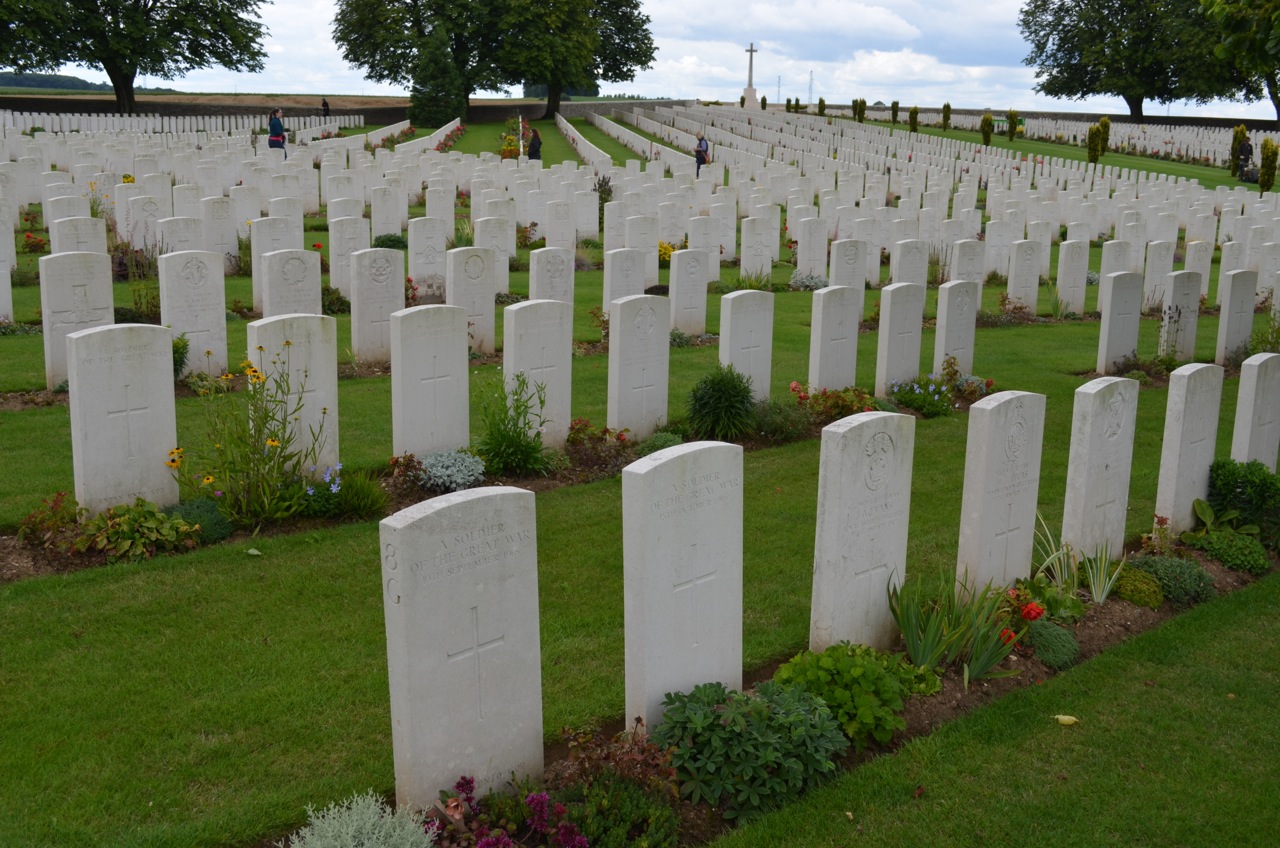
Canada alone lost 61,000 warfare dead. Many more returned from the difference damaged in judgement or body. More than 170,000 were seriously injured in combat, and thousands more suffered from "crush-outrag" (go through Post-Traumatic Stress Disquiet (PTSD) in Canada). The survivors found that almost every aspect of North American country life, from the length of skirts to the value of money, had been changed aside the war years. Governments had assumed responsibilities they would never abandon. The income revenue enhancement would survive the war. So would government departments tardive to become the Department of Veterans Personal business and the Department of Pensions and Internal Health.
Foreign, Canada's soldiers had struggled to achieve, and had won, a considerable arcdegree of autonomy from Island control. Canada's immediate wages for her sacrifices was a modest presence at the Paris Peace League at Versailles (see Treaty of Versailles) and a seat in the new League of Nations. All the same, the big national divisions 'tween French and English created away the war, and especially by the conscription crisis of 1917, ready-made postwar Canada fearful of international responsibilities. Canadians had done great things in the warfare but they had not done them together.
(Figure also: Art and the Great War, Documenting Canada's World War I, In Flanders Fields, Monuments of the First and Second World Wars and Unmapped Soldier.)


Where Did the U.s. Navy Defeat the Spanish Fleet?
Source: https://www.thecanadianencyclopedia.ca/en/article/first-world-war-wwi

Post a Comment for "Where Did the U.s. Navy Defeat the Spanish Fleet?"